6207 W 87th St - Westchester, CA 90045

By Cozette Vergari :

The new Westchester/Playa Historical Society Discovery Center opened to the public August 1st of this year, celebrated by the LAX Coastal Chamber of Commerce at the August 24th Ribbon Cutting. In attendance, to offer their congratulations, were City Controller Ron Galperin, City Attorney Mike Feurer and Airport Commissioner Val Velasco. The city officials recognized the hard work and dedication of the Westchester/Playa Historical Society Board of Directors, in reaching their targeted goal, as well as the value of their mission to the community at large.

Notwithstanding the challenges that Covid-19 has rendered, after an exciting year of strategic planning and implementation, the Westchester/Playa Historical Society Board of Directors have been working diligently to bring its dream of a public location for visitors to explore the rich history of our local communities to fruition. The mission of the Westchester/Playa Historical Society, incorporated as a nonprofit entity just over a year ago, is to gather, study and preserve the history of the communities of Westchester, Playa del Rey and Playa Vista, providing educational and research opportunities for all ages. The new WPHS Discovery Center will be a major component of that mission.

Also recognized at the Ribbon Cutting were Founders Circle Donors, Cozette Chattin Vergari Family, Drollinger Family Charitable Foundation, Westchester Rotary Foundation and Playa Venice Sunrise Rotary Foundation, along with Diamond Donors Richard Moon, Amy Frelinger and Los Angeles World Airports, as well as Emerald Donors Patty Crockett, Maria Davis, Director of Carousel Schools, Marc Mohaher on behalf of Technologent, John and Gail Grover, and Lisa Schwab.

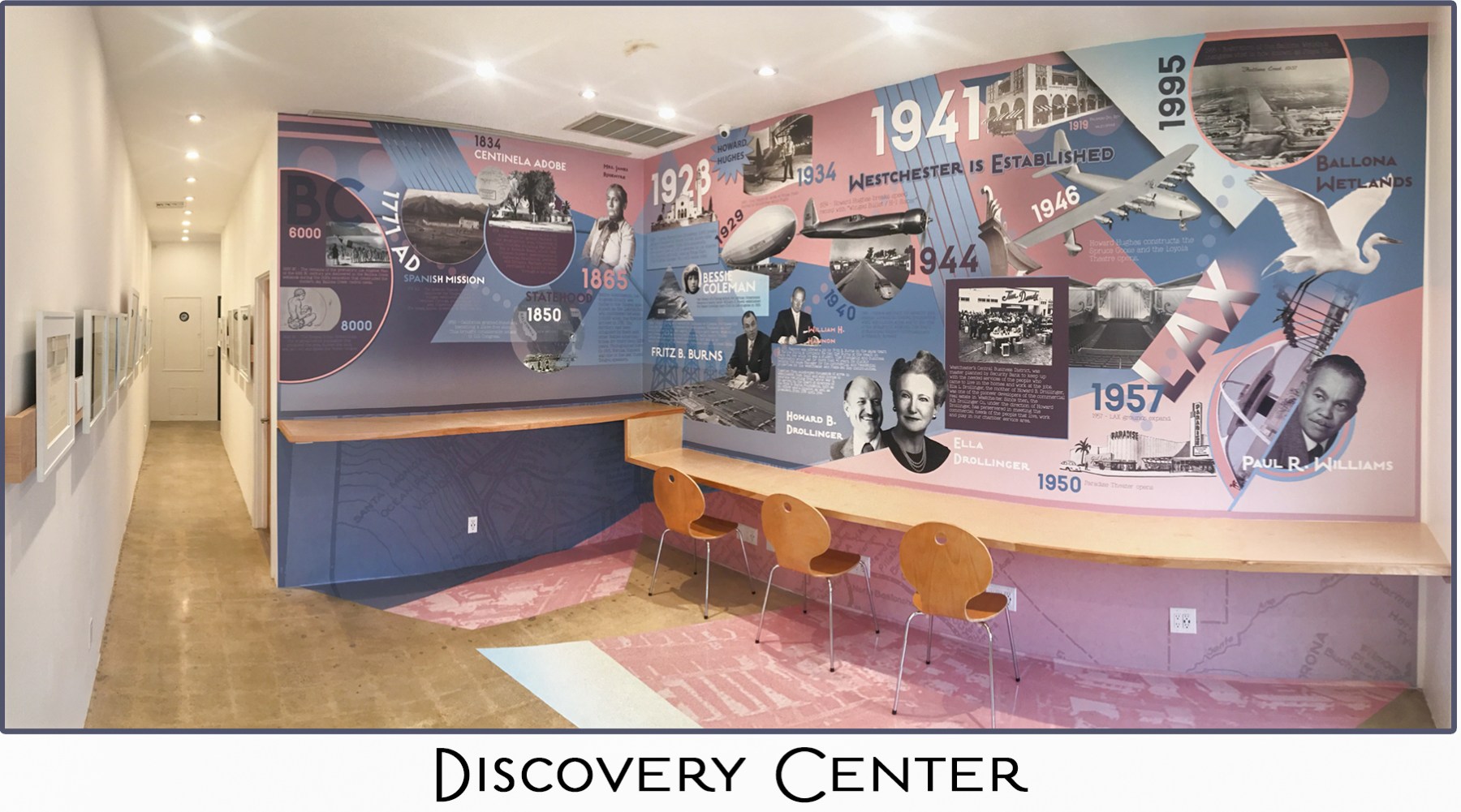
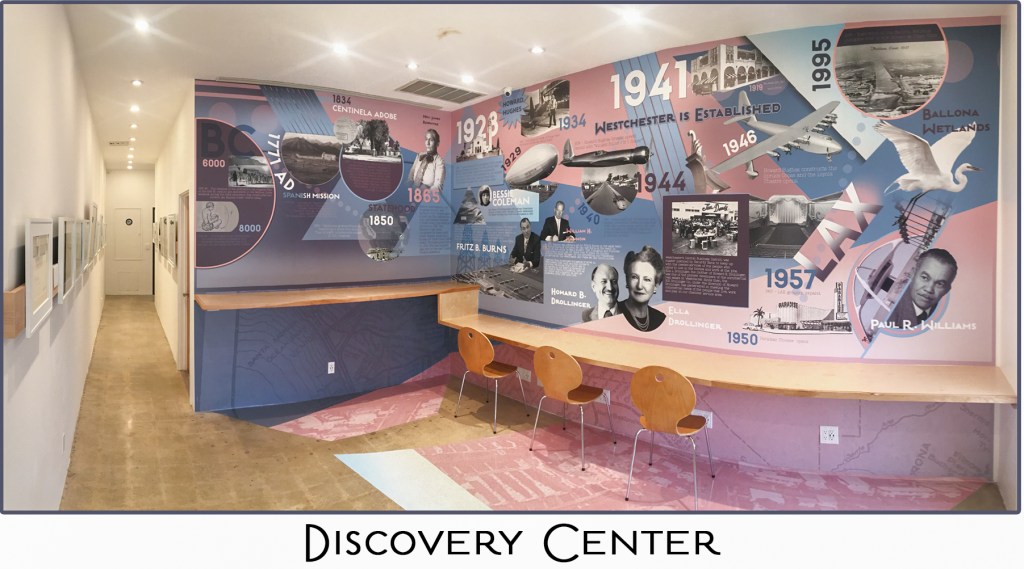
The Discovery Center is located at 6207 W. 87th St.  in the Westchester Triangle commercial district, which in and of itself is considered an historical commercial retail district, within the Los Angeles region. Architect Lara Hoad was hired to collaborate with Board members, Cozette Vergari, Marcelo Cruz, Art Wexler, Mike Heffernan  and David Russell in the design of the buildout, after which Contractor Robert Sawyer was engaged to implement the new design of the Discovery Center. The WPHS Board also collaborated with Otis College of Art & Design students in the new branding assets of the Westchester Historical Society, including the interior murals, dramatically and relevantly depicting local history as far back as 8000 B.C. The Discovery centered throughout this process of implementation has been equipped with updated technology both to serve and protect access to its archives. The start up of this location would not have been possible without the support of Drollinger Properties and Truxton Investment Company.

As health protocols permit, the Westchester/Playa Historical Society Discovery Center will be open to the public on Sundays from 9 a.m. to 1 p.m. and otherwise by appointment or special event. Student filed trips will be available to schools, to enrich the California mandated history curriculum, requiring students to study state and local history. Beginning in January will be full and ongoing calendaring of Historical Exhibits, memorializing major themes in the history of the region and individual pioneers who directly impacted the birth of our local neighborhoods in the early 1900s, and others who followed to protect and preserve thoughtful development. Individuals with historical ties to the community will be invited to record their oral histories to be housed among the historical society’s archives. The Discovery Center will also be available for special events, partnering with The Book Jewel and other local businesses. As soon as reasonably possible, the WPHS Walking Tour and WPHS Driving Tour will be resurrected. When the pandemic shut our lives down, WPHS was forced to cancel the very first “sold out” tours that were planned for May of last year.

Visit the newly launched Westchester/Playa Historical Society website at www.wphistoricalsociety.org . If you are interested in supporting the efforts of the WPHS, please reach out at wphistorical@gmail.com. There are donor, contributor, exhibit sponsorship and volunteer opportunities.
By Cozette Vergari :

Some of you may share my long time dream of being able to travel in a time machine, which could propel me backwards in time, while standing at the same location throughout the ride, to observe what was happening at that exact spot 100 years ago, 1000 years ago and on and on. To share what that might look like in our local community, as you read, I will travel all the way back to 65,000 B.C. and move forward in time from the beginning.  

Current prehistoric migration theories consider the possible links between our local native populations to Northern China and Siberia as far back as 65,000 B.C. There is a greater degree of certainty surrounding the theory of migration from Asia circa 25,000 B.C., as well as migration in 13,000 B.C. across the ice bridge that covered the Bering Straits between Asia and North America. In fact, there is evidence of settlement on the islands off the coast of southern California as early as 12,500 B.C.

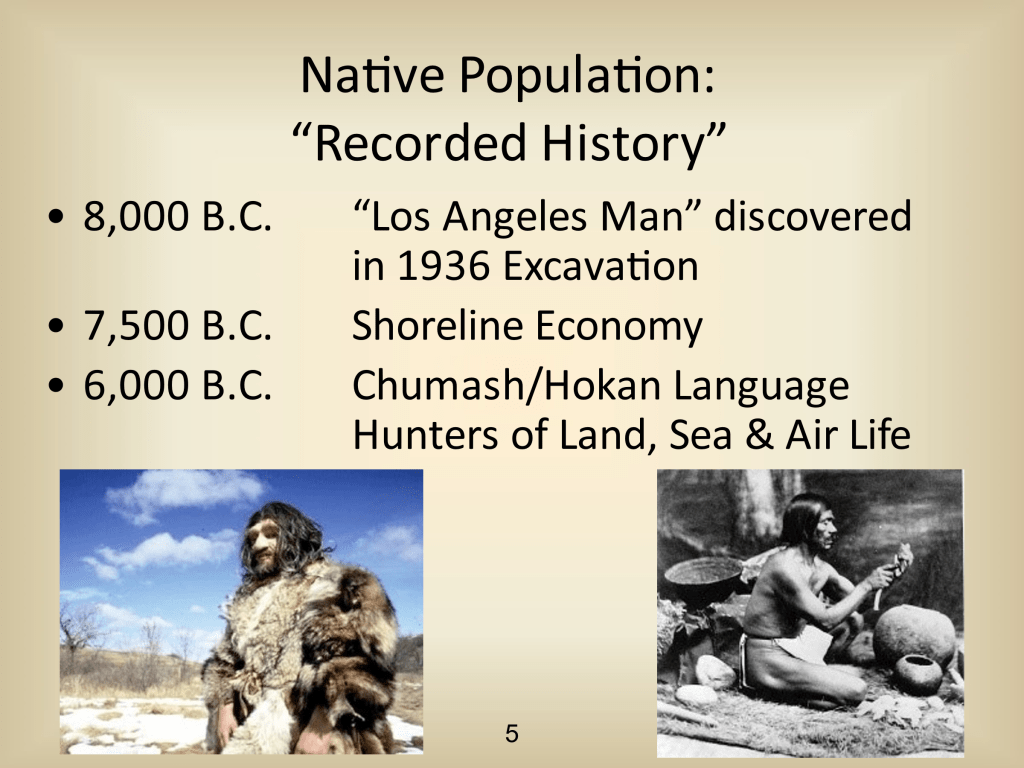
Recorded history unveils evidence discovered in the 1930s excavation of Ballona Creek, when the Army Corps of Engineers created a nine-mile long flood control channel to protect the growing metropolis from flooding in the Los Angeles basin. The natural creek, once meandered through the Ranchos of the Los Angeles basin. During the excavation, partial remains of the “Los Angeles Man” were discovered in a storm drain. They had unearthed the mineralized cranium of a human skull. Though radiocarbon dating indicated an age of approximately 23,600 years of age, current theory suggests, due to lack of other supporting evidence of human habitation along the Ballona Creek, the Los Angeles Man is likely to have settled here circa  8000 B.C.

There is further evidence of a shoreline economy within the footprint of the Westchester, Playa del Rey and Playa Vista communities as fare back as 7500 B.C. There is also evidence of the Chumash Native American population, who spoke the Hokan language and who  survived as hunters of land, sea and air life, within this same footprint. There is evidence of a neighboring Tongva Village settled near the Centinela Springs flowing through Westchester, Playa del Rey and Playa visit circa 5000 B.C. The Shoshone displaced the Chumash, circa 2000 B.C., migrating from the Mohave Desert to the Los Angeles Basis, which they named the “Land of the Smoke.” The area was already polluted from the camp fires of the native population. They spoke Uto Aztecan, and considered experts in irrigation and the canalino culture, traded acorns, salt, fish, baskets, dogs and clothing with other coastal traders for the items they needed in return, such as obsidian for spears and arrowheads.

There is some evidence of foreign explorers arriving circa 1200. A Spanish novel, written in 1510, chronicles Spain’s conquest of what is now Mexico and California and speaks of New Spain and the Island of California. In 1542 Spanish Explorer Juan Rodriguez Cabrillo, who was first greeted by the native population at Santa Catalina Island, and followed by entering the mainland through the Baya de los Fumos (Bay of Smokes), believed to be the present day San Pedro Harbor. During the period of Spanish colonization and the founding of the mission system, in particular the building of the Mission of San Gabriel, circa 1770, the Tongva society became known as the Gabriellinos and today are often referred to as the Gabrielino-Tongva Tribe. By 1800, the native population death rates nearly doubled due to the new foreign settlors.

After a hard fought Mexican War of Independence from 1810-1821, Spanish Rule ceded to Mexican Rule.  And as soldiers were awarded land grants for their service in this War of Independence, within our Westchester/Playa footprint, Mexican soldier Antonio Avila was granted 40,000 acres and acquired Rancho Sausal Redondo in 1937, in which the most of the present day Westchester/Playa communities sit. Rancho Ballona was acquired by Ygnacio and Augustin Machado and Felipe and Tomas Talamantes in 1939. The Centinela Adobe, which still sits at the eastern edge of Westchester, was the first home to be built from the local community footprint all the way south to the Redondo Beach / Torrance area, was built in 1829 by Ignacio Machado.

After the U.S. invaded Mexico, which included Rancho Sausal Redondo and Rancho Ballona, the Treaty of Guadalupe Hidalgo gave Alta California to the U.S. and “California” becomes a U.S. Territory. It took two years of contentious debate, over the issue that California citizens wanted to enter the Union as a non-slavery state.  Statehood was granted in 1850.

Stay tuned for next month’s continuing time-machine journey. In the meantime, visit the Westchester/Playa Historical Society Discover Center, Sundays between 9 a.m. and 1 p.m. On Sunday, September 5th, the Discovery Center will be showing “Eminent Domain, An LA Story by Leo Sichi at 10:15, 11:00 and 11:45 a.m., with the last showing at 12: 30 p.m. Leo is a Westchester resident and student at Loyola High School, whose video has been recognized by the 2021 All American High School Film Festival. Visit our website https://wphistoricalsociety.org/.

Map of the Ranchos

By Cozette Vergari :

For those of you, who last month joined my time-machine travel back to 65,000 B.C., we are continuing the journey this month. Standing in the midst of today’s Westchester/Playa community, our last travels took us back to the evidence of human settlement on the islands off the coast of Southern California circa 12,000 B.C. and sped us forward with various time stops on the same Westchester/Playa footprint all the way to California’s Statehood in 1850. Over a span of the 300 years leading up to statehood, our Westchester/Playa community stood under the flags of three different  countries, the flag of Spain, then Mexico and finally the United States.

In 1850, our community’s land belonged to two brothers. While still a part of Mexico circa 1830’s, 2200 acres of land, to become known as Rancho  del Aguaje del Centinela, was granted to Bruno Avila. And another 40,000 acres, to become known as Rancho Sausal Redondo, running from what is now the Venice and Marina communities south to Redondo Beach, was granted to Antonia Avila. Overtime through various transactions, circa 1872, Scotsman Robert Burnett acquired both Ranchos and in 1873 leased his land to Alice and Daniel Freeman.

The Freemans moved from Canada to America, due to Alice’s medical condition that required the mild and dry climate of the coastal area just southwest of El Pueblo de Nuestra Senora la Reina de los Angeles de Porciuncula, which in English translated to “The Town of Our Lady the Queen of the Angels of Porciuncula (small area).  Today, the pueblo is commemorated in the historic district of Los Angeles Pueblo Plaza and Olvera Street, the oldest part of Los Angeles. The Freemans settled into the Centinela Adobe, the first ranch house adobe  built on all of the then 42,200 acre parcel, which sits on the eastern most edge of Westchester, previously built by Ignacio Machado circa 1830 . By 1885, Daniel Freeman had purchased the land and formed the Centinela Land Company. He builds his Land Office in what is now Inglewood and plans to sub-divide the area, while planting fruit trees and raising sheep to provide income in the meantime. The area suffers from a severe drought, and Freeman gambles on dry farming and wins, acres of wheat fields.

From 1886-1890, Daniel Freeman wages in a battle for Port Ballona to become the official Port of Los Angeles. His competition is William Banning, who is pushing for the site of Port Willington.  While this is happening, Henry Huntington begins the Pacific Electric Trolley Service, laying tracks form downtown to Port Ballona. To Freeman’s disappointment, Port Wilmington is chosen as the official port of Los Angeles, which today supports 20% of all cargo coming into the United States, covering 7500 acres of land. Had Freeman won, imagine what the time machine would be showing us now. Daniel Freeman becomes the second President of the Los Angeles Chamber of Commerce from 1893-1894 and founds the City of Inglewood in 1908.

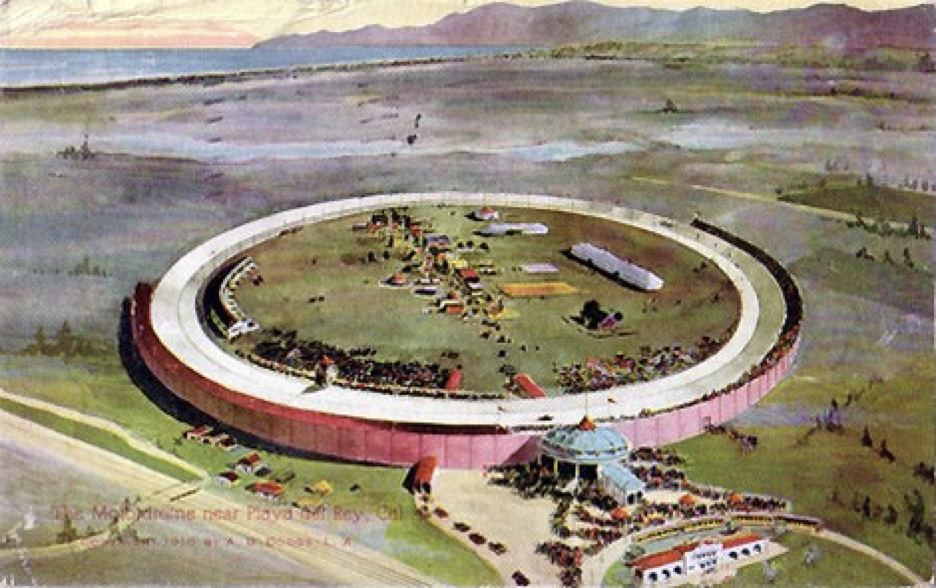
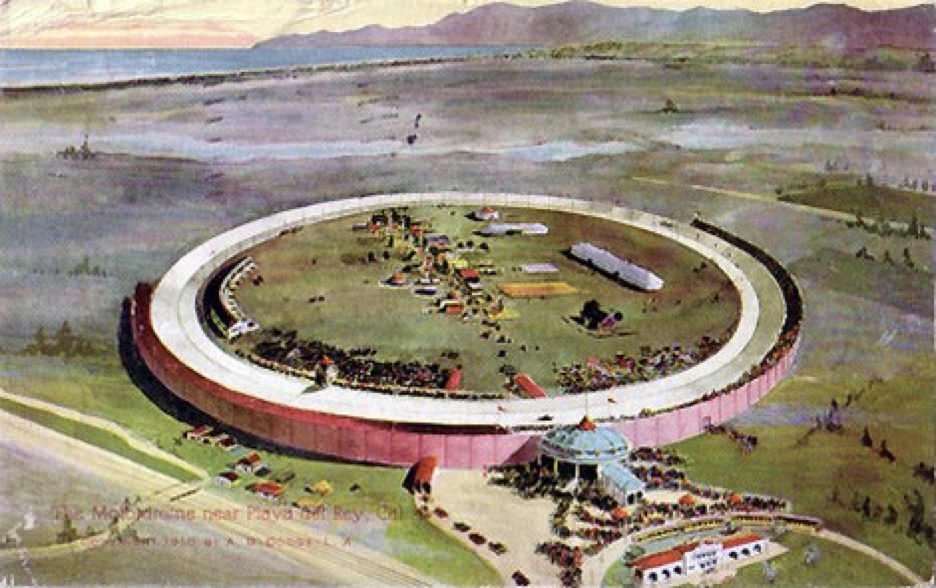
Because Freeman felt no other value to the area of our now treasured Westchester/Playa communities, after losing the bid for the Port of Los Angeles in 1890, he donates the land to the City of Los Angeles. Circa 1900 the Venice Midway Park Amusement Pier is built. The Pacific Electric Trolley Service builds tracks through the wetlands from downtown and heads south down the coast along what is now Playa del Rey to Redondo Beach. The Los Angeles Motordrome opens in the wetlands of now Playa del Rey. The first of its kind, the Los Angeles Motordrome was a highly successful venue for motorcar, motorcycle and aviation events and competitions, attracting large crowds of paying spectators, but lasted just three years due to a fire that destroyed the wooden track.

Once again, stayed tuned for our continuing time machine travel. In the meantime visit the Westchester/Playa Historical Society Discovery Center in the Westchester Triangle, open on Sundays from 9 a.m. to 1 p.m. or by appointment. Learn more at www.wphistoricalsociety.org

Los Angeles Motordrome … Playa del Rey wetlands

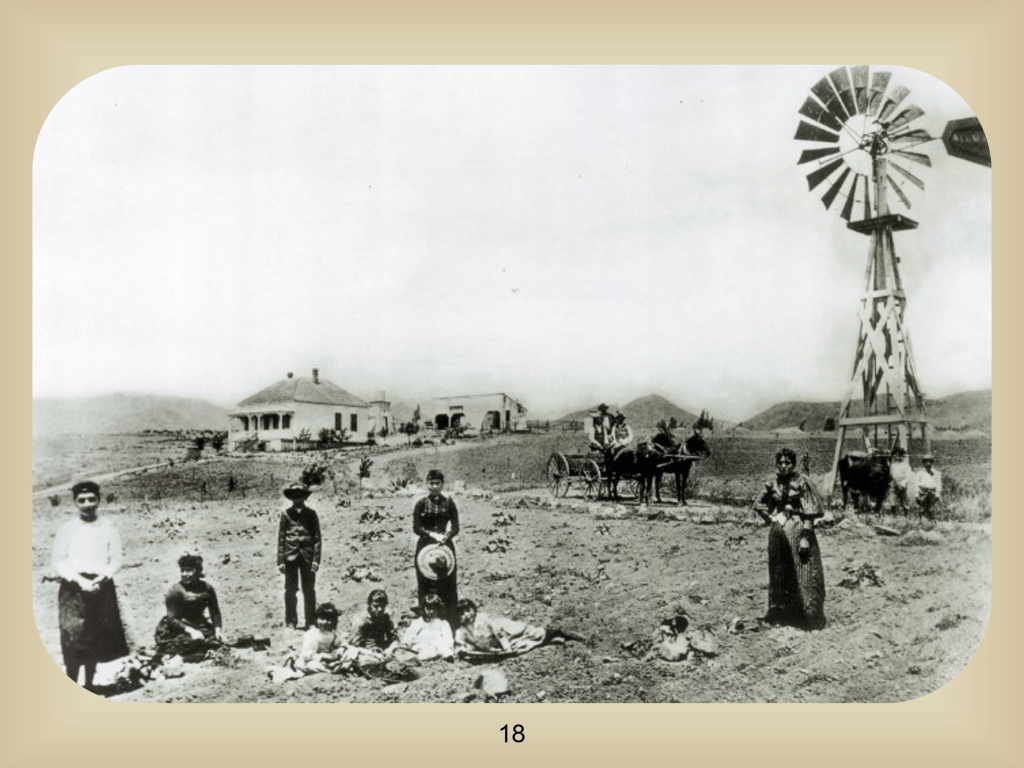
First photo 1850 the area at the time of Statehood